Sunday, October 27, 2013

Tow #7- The Telegraph Article/ "'Yeti Lives'- An Abominable Snowman is part polar bear and still roams the Himalayas"/ Jasper Copping


Nearly as famous as the grandeur of Mt. Everest is the notorious creature said to live there, the Yeti. People have claimed to see it for decades, and new "evidence" pops up all of the time. However, the most people are skeptics; they won't believe such a monster could exist without legitimate proof. Luckily for them, writer Jasper Copping explains the scientific discovery of English professor Bryan Sykes with actual evidence. According to his recent findings, the Yeti could be a hybrid of a typical brown bear and the polar bear; the tested material comes from mummified “Yeti remains” and “yeti hair” that was found, and was apparently a 100 percent match to the polar bear and brown bear DNA. Copping gives a brief background on the Yeti that provides a juxtaposition of ridiculous Yeti sightings and myths and Sykes’ professional comparison of ancient polar and supposed Yeti DNA. He also appeals to logos through the use of dates, measurements, and other statistics. Copping’s compilation of Yeti evidence serves to reassure believers of the Yeti’s existence as well as to collect information for skeptics. It also takes on the role of entertaining readers because of its placement in the Telegraph Newspaper, in the “Weird News” section. This article is successful in its attempt to influence readers and entertain because it makes readers think. It also employs exemplification of the Yeti’s existence because of other, quoted accounts of Yeti sightings/evidence. Both the author of the article and the professor (who may have found a breakthrough in Yeti genetics) are credible and well-experienced, and therefore, their appeals to ethos though exemplification and the author’s diction make the article more powerful when it comes to achieving its purpose. Whether or not the Yeti really does exist, the article is informational and scholarly, without feeling weighted or fake. 


Copping, Jasper. "Yeti Lives': Abominable Snowman Is 'part Polar Bear and Still Roams the Himalayas'" The Telegraph. The Telegraph Newspaper, 17 Oct. 2013. Web. 27 Oct. 2013.

N.d. Photograph. Build Your Own Yeti. Web. 27 Oct. 2013.

Sunday, October 20, 2013

TOW #6- PC World Magazine Article/ "The 21 Worst Tech Habits, and How to Break Them"/ Christopher Null

Without technology, the world would be stuck in the 20th century. It clearly has its benefits, but unfortunately, it also has its downsides. The PC World magazine feature, “The 21 Worst Tech Habits, and How to Break Them” brings to attention the idea that as good as technology is, it can still be conductive to bad habits.
Christopher Null, an author and film critic, adds his experience to the feature through the use of exemplification. He details easy fixes to each habit and explains what could happen as an effect of the “worst habits”, therefore also including the strategy of cause and effect. Humor is another important strategy applied to this piece. Null tends to use a harsher-toned humor, similar to sarcasm when he gives examples of bad habits. However, this sarcasm can be difficult to understand if one doesn’t understand the vocabulary Null is using. The use of technology-related jargon and educated diction makes the author all the more an authority on his subject, but would be hard for children to understand. Consequently, the article seems to be directed towards either “technology-savvy” people, professionals, or average American citizens who are very in touch with new tech. gadgetry. The feature provides opportunities for more information when it emphasizes links to websites and photographs/illustrations, appealing to visual learners and/or just plain magazine lovers. But through it all, the article stays true to its motto- it is written for a “PC World”, with technology in mind at all times.
Another wonderful thing about the feature is that though it’s informational, it is presented in an easy-to-read, interesting list format. It causes readers to want to check out their own habits as they read the article, but is still reassuring that such habits can be fixed or improved. The feature artfully showcases the worst habits, their effects, and their solutions in a way that could start to help non- “tech savvy” people understand technology, and start to live a lifestyle that incorporates it.
"Christopher Null." Wikipedia. Wikimedia Foundation, 10 Aug. 2013. Web. 20 Oct. 2013.

N.d. Photograph. Boy Genius Report Blog. Wordpress. Web. 20 Oct. 2013. 

Sunday, October 13, 2013

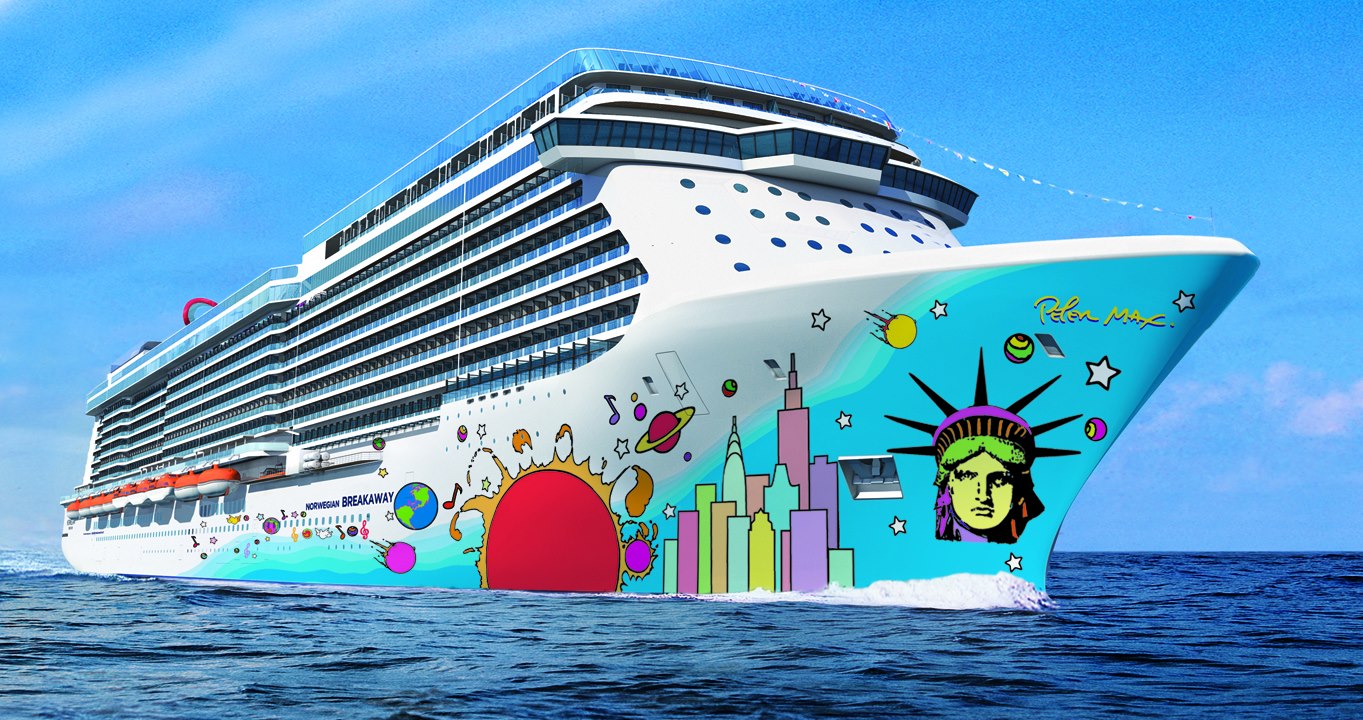
Tow #5 (Visual Text)- Norwegian Cruise Line Advertisement/"Experience Amazing. Cruise Like A Norwegian"/Norwegian Cruise Line

By definition, a vacation means "freedom or release from duty, business... usually used for rest, recreation, or travel..." (Dictionary.com). But according to Norwegian Cruise Line, vacations don't have to be average; they can help people "experience amazing”. In this advertisement, the company introduces two of their ships, the Norwegian Getaway and the Norwegian Breakaway. Their descriptions are embellished by luxurious diction and vivid imagery that attempt to persuade readers that a Norwegian Cruise Line vacation is unique, an “experience”. The pictures in the advertisement also seem to be trying to convince the reader that the cruise ships are destinations, tropical paradises that “bring the best of NYC to sea” and “the sizzle of Miami”. Each ship is represented with stereotypical images from their port town acting as candles on top of a cake, the Getaway with the Miami skyline and the Breakaway with the New York City skyline. Whether it was intentional or not, the allusion to candles on a cake helps to enforce the idea that a cruise vacation is like a fun party. The company also plays up their best features by mentioning “lightning-fast waterslides”, “the hottest theatre and musical entertainment”, and “27 dining options”, including a restaurant by Iron Chef Geoffrey Zakarian. This advertisement seems geared towards parents (it can be found in Martha Stewart Living magazine). It works to compete with other cruise lines by mentioning what it means to be on one of their cruises, connecting to their slogan (“Cruise like a Norwegian”). They make their cruises seem flexible to any schedule by simply saying that planning can be done through an easy phone call or visit to their website. The easygoing, fun tone (displayed by the vibrant colors and funny, almost whimsical photos) is present throughout the whole advertisement and helps the company to compete well with other companies by catching their readers’ attentions and promising to be different from other American cruise lines, to “cruise like a Norwegian”.

Norwegian Cruise Lines. Advertisement. Martha Stewart Living Aug. 2013: 10. Print.


Sunday, October 6, 2013

TOW #4- IRB/ "1491: New Revelations of the Americas Before Columbus"/ Charles C. Mann

In most history textbooks, Native Americans have been stereotyped wrongly. Even their other name, "Indians" incorrectly labeled them and has stuck with them since Columbus first landed in the West Indies. 1491: New Revolutions of the Americas Before Columbus is an in-depth history of "the true story of the natives in America before Columbus" by Charles C. Mann, magazine correspondent, awarded author, and National Magazine Award finalist. It focuses on the real facts of Native American life, things that are not well-known by most people or omitted completely from textbooks (i.e. Was Plymouth really built directly on top of a Wampanoag village? Did Native American tribes just simply vanish from the Americas prior to the arrival of Europeans, or were Europeans involved? ). Mann attempts to portray how much the average person assumes about the Native Americans and how much they “know” really comes from fact. To do this, he artfully and successfully compares and contrasts the history of the Americas found in textbooks with new facts, statistics and observations that historians, archaeologists, and anthropologists have uncovered recently about Native American society. For example, he brings the famous “friendly Indian”, Sqaunto, from childhood Thanksgiving tales and instead describes him as Tisquantum, a Wampanoag guard who learned English while in captivity. He appeals to logos and ethos through exemplification and stories of his own travels, adding to the professionalism of his book and making it more interesting than other non-fiction, which can sometimes very dry and bland to read. Mann gears his writing toward a mature audience comprised of scholars, historians, and those who are just interested in history. The language he uses is appropriate for both teenagers and adults due to powerful but understandable diction. 1491: New Revelations of the Americas Before Columbus is enlightening and non-stereotypical, categorizing Native Americans as they should be categorized- as advanced, intelligent human beings. 

Sunday, September 29, 2013

TOW #3- The Washington Post Article/ "Pearls Before Breakfast"/ Gene Weingarten


"Beauty is in the eye of the beholder". As unfortunate as it is, the human race is a materialistic species. People value what they consider beautiful, and if it doesn't meet their expectations, they pay no attention to it. This idea was expertly applied in in January 2007 when The Washington Post decided to do a psychological experiment: Get famous violinist Joshua Bell to play six of the most complicated classical pieces ever written (including Bach’s Chaconne and Schubert’s Ave Maria), on a Stradivari violin from 1713, while wearing street-clothes in a Washington D.C. metro station, and see if anyone will stop to listen.


After 45 minutes of playing, Bell only made $32 (from 27 people) and caught the attention of only 7 who were willing to stop and take notice. This is surprising because, in general, tickets to Bell’s performances cost hundreds of dollars. Experienced Washington Post reporter/columnist Gene Weingarten expertly uses exemplification and testimonies to appeal to ethos and pathos in the text, and convince readers that though “beauty is in the eye of the beholder”, people shouldn’t “judge a book by its cover”. Through quotes from Joshua Bell, passerby, and acclaimed composers, Weingarten establishes both the difficulty of the music Bell was playing and Bell’s credibility as a musician. The examples he uses make Bell seem like an authority in his field, and also signify how monumental the social experiment was emotionally for the child-prodigy; why it was so sad that more people ignored Bell than praised him. The vocabulary Weingarten includes also adds to the curious mood of the article and the vivid imagery of the articles examples and anecdotes. The author portrays nearly every character in his article favorably and makes the events of this psychological study meaningful to readers, whether they are fans of classical music or not. “Pearls Before Breakfast” attempts to make readers more culturally aware and give them an eye for “real beauty”. 
The Man with the Violin. 2007. Photograph. Washington D.C. Hole in the Donut Cultural Travel. By Barbara Weibel. Barbara Weibel, 12 Sept. 2009. Web. 29 Sept. 2013.

Saturday, September 21, 2013

TOW #2 (Visual Text)- Pepperidge Farm Advertisement/ "Raisin cinnamon Swirl Bread"/ Pepperidge Farm, Inc.


 The well-known saying, "Breakfast is the most important meal of the day" is often used by parents who try to get their families to eat nutritious, filling breakfasts. Pepperidge Farm supports and thrives off of this idea, weaves this mentality into every aspect of the advertisement above, with the intention that parents will make Pepperidge Farm products a part of their families’ meals. The founder, Margaret Rudkin, started the business in the 1930’s after developing natural recipes that did not give her son allergies. Today, the company continues to use nutritious ingredients and bake Rudkin’s bread with “lots of love”. This “love” is apparent through the heart in the center of the slice of toast and vocabulary included in the advertisement. The fact that Pepperidge Farm says “We’re Bakers. But we’re also parents, too” appeals to pathos and attempts to invoke emotion in anyone who see the advertisement.

But Pepperidge Farm uses more than just this hook to attract people to their advertisement. The company plays with its readers’ senses by using colorful, comfortable pictures that intend to remind people of home. Even the company’s slogan, “Good is in the details”, works with the pictures and hook to create feelings of nostalgia for comfort foods. Pepperidge Farm believes that their product is good, and attempts to make their family-friendly audience think so too. The advertisement seems to do its job because it is realistic and comforting, and Pepperidge Farm’s advertisements can be found commonly on TV and in magazines, like the Food Network Magazine this advertisement is in. It also seems easy for parents to trust Pepperidge Farm’s products because the advertisement appeals to ethos, and Pepperidge Farm’s bakers, as fellow parents, seem like trustworthy authorities. The advertisement is successful because it displays its product in a clear and friendly way, and is not screaming “Buy me” to people, but rather “love me” and “enjoy me”.


Pepperidge Farm. Advertisement. Food Network Magazine Sept. 2013: 75. Print.

"Pepperidge Farm® – The Margaret Rudkin Story." Pepperidge Farm® – The Margaret Rudkin Story. Pepperidge Farm, n.d. Web. 21 Sept. 2013.

Works Cited for Summer Reading Post